Understanding Pain Sources: Why Your Car Matters
Chronic pain rarely starts suddenly. It typically begins as minor discomfort – something you can ignore or work around – until one day it develops into persistent, nagging pain that affects your daily life. The period when you first notice that minor discomfort is actually more important than most people realize, because there’s an associated action or position causing your muscular pain to develop.
The challenge with driving-related back pain is that most of us can’t simply stop driving. We need our cars for work, errands, and daily life. This means we’re repeatedly putting our bodies in the same problematic position day after day, allowing minor discomfort to evolve into chronic pain patterns.
How Driving Position Creates Low Back Pain
When you sit in a car, several factors can stress your lower back:
Seat Angle and Recline
Most car seats position your hips lower than your knees, creating posterior pelvic tilt. This flattens your natural lumbar curve and puts excessive pressure on your lower back discs. Over time, this position can lead to disc compression, muscle strain, and chronic pain.
Leg and Hip Positioning
Your leg position while driving directly impacts your low back position. When your legs are cramped, extended too far, or positioned awkwardly to reach pedals, your pelvis tilts and your spine compensates. This compensation creates muscle tension that builds over weeks and months of driving.
Arm and Shoulder Reach
Reaching too far forward for the steering wheel causes you to round your upper back and shoulders forward, which in turn affects your lower back position. This full-body misalignment creates a chain of tension from your neck down to your low back.
The Size Mismatch Problem
Tall Drivers in Small Cars
If you’re a 6’6″ tall, 270-pound person trying to fit into a compact car, your body simply doesn’t have enough space. Your knees might be jammed against the dashboard, forcing your pelvis into positions that strain your low back. The lack of legroom means you can’t shift positions during long drives, and that static posture creates progressive muscle tension and pain.
Short Drivers in Large Vehicles
On the flip side, a 5′ tall, 100-pound person driving a large SUV or truck faces different but equally problematic challenges. You might need to scoot forward to reach pedals, forcing you to stretch your arms uncomfortably to reach the steering wheel. Or you might slouch down in the seat to get your feet properly positioned on pedals, creating poor spinal alignment that leads to back pain.
Both scenarios create chronic pain because they force your body into unnatural positions that your spine wasn’t designed to maintain for extended periods.
7 Ways to Fix Your Car Seat Position and Stop Low Back Pain
1. Adjust Your Seat Height
Your hips should be level with or slightly higher than your knees. Many modern cars have seat height adjustments – use them. If your car doesn’t have this feature, consider adding a firm cushion to raise your sitting position slightly.
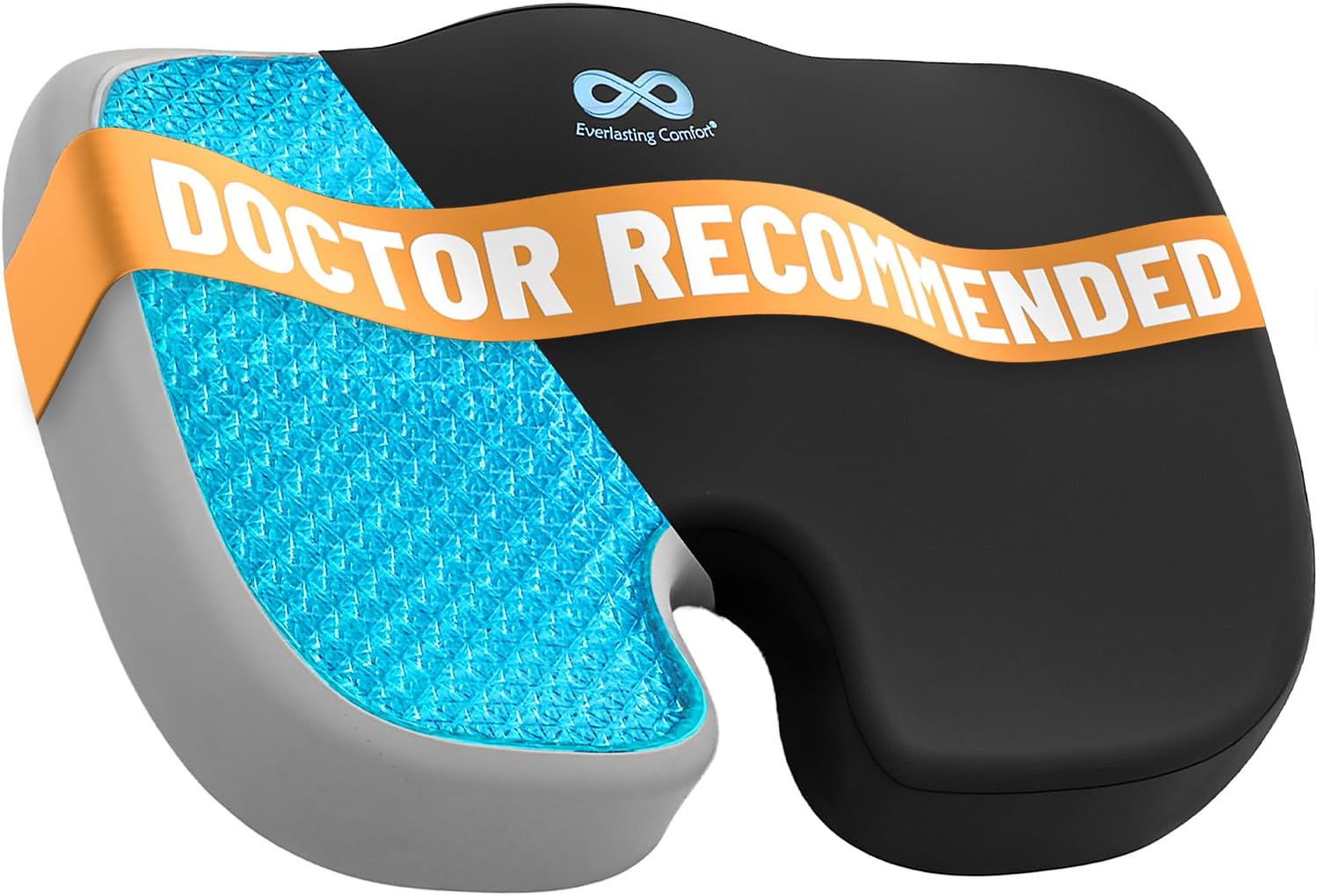
Recommended Products: Seat support cushions with wedge design can elevate your hips and support your natural lumbar curve simultaneously. Below you’ll see three recommendations from Everlasting Comfort. The first is a standard memory foam seat cushion for people who do not think memory foam is too hot for them. Choose the second sacral cut out seat pad if you tend to think foam makes you too hot. For a seat that has a closed hip angle choose the standard wedge shape seat cushion. All three options help maintain proper pelvic alignment during long drives.


Amazon Associate Links
2. Set Proper Seat Recline
Your seat back should be reclined about 100-110 degrees – not perfectly upright (90 degrees) and not reclined like you’re lounging (120+ degrees). This angle supports your lumbar curve while allowing your muscles to relax slightly.
3. Adjust Seat Distance from Pedals
You should be able to fully depress the brake pedal while maintaining a slight bend in your knee (about 120-130 degrees). Your knee should never be completely straight or sharply bent while driving. This position allows proper circulation and reduces hip flexor tightness that contributes to low back pain.
4. Use a Lumbar Support
Most car seats don’t provide adequate lumbar support. Adding a lumbar cushion fills the gap between your lower back and the seat, maintaining your natural spinal curve and reducing disc pressure.
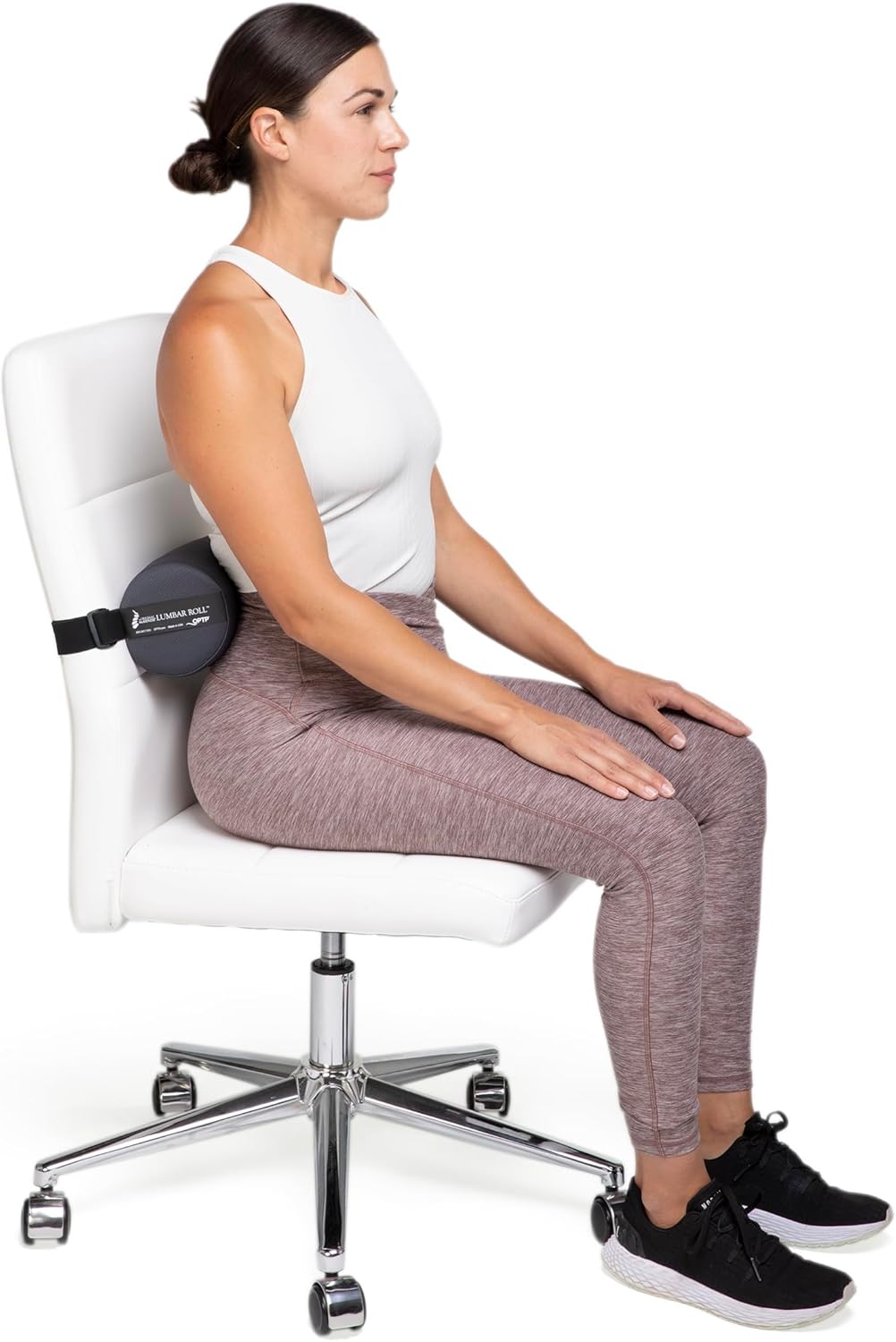
Recommended Products:Lumbar cushions can provide support however it should be tailored to your need. One lumbar support will not work for all people. The first option here is from OPTP and is quite popular and provides posture guidance. The second is a self inflating style that transports easily and can be overinflated for additional support. The third is a basic memory foam support that will take up space in your lumbar region in seated, laying on your back and laying on your side. One support may not work in all chairs as well. You may have one for the car and one for the office and yet another for the home.


Amazon Associate Links
5. Position Your Steering Wheel Correctly
Your steering wheel should be close enough that your shoulders stay against the seat back when your hands are at 9 and 3 o’clock. If you’re reaching forward, you’re creating upper back tension that cascades down to your lower back.
6. Take Driving Breaks with Targeted Stretches
For drives longer than one hour, stop every 45-60 minutes to stand, stretch, and walk around for 5 minutes. This breaks up static posture and allows your muscles to reset. Even better – use these breaks to perform specific stretches that target the muscles most affected by driving.
These stretches may not be best if you have specific pain or injury. Always consult the doctor who monitors your back pain.
Standing Quad Stretch
Your hip flexors and quadriceps become shortened and tight from prolonged sitting with your knees bent. Standing quad stretches help restore length to these muscles and reduce the pulling force they create on your pelvis and low back.
How to perform: Stand next to your car for balance. Bend one knee and grab your ankle, pulling your heel toward your glutes. Keep your knees close together and avoid arching your low back. Hold for 30 seconds, then switch sides. You should feel a stretch down the front of your thigh.
Hip Flexor Lunge Stretch
Hip flexors get extremely tight from sitting, pulling your pelvis forward and creating low back compression. This stretch directly addresses one of the main culprits of driving-related back pain.
How to perform: Step forward into a lunge position. Keep your back knee straight and push your hips forward gently. You’ll feel a stretch in the front of your rear hip. Hold for 30 seconds per side. Don’t bounce – use gentle, sustained pressure.
Standing Hamstring Stretch
Tight hamstrings pull down on your pelvis, flattening your lumbar curve. Stretching them during breaks helps restore proper pelvic position.
How to perform: Place one foot on your car’s bumper or running board (or a curb if nothing’s available). Keep that leg straight and lean forward from your hips, not your waist. You should feel the stretch behind your thigh. Hold 30 seconds per leg.
Torso Rotation Stretch
Sitting creates stiffness in your spine. Gentle rotations restore mobility and release muscle tension.
How to perform: Stand with feet shoulder-width apart. Place your hands on your hips and gently rotate your upper body left, then right. Move slowly and deliberately – this isn’t about how far you can twist, but about restoring movement. Perform 10 rotations in each direction.
Cat-Cow Stretch (Modified Standing Version)
This classic yoga movement helps restore your lumbar curve and releases tight back muscles.
How to perform: Stand with hands on your thighs for support. Arch your back and look up (cow position), then round your back and drop your head (cat position). Move slowly between positions 8-10 times. This mobilizes your entire spine.
Pro tip: Set a timer on your phone for 45-minute intervals during long drives. When it goes off, find a safe place to pull over and perform all five stretches. The entire routine takes just 5 minutes but makes a significant difference in how your back feels when you reach your destination.
7. Consider Professional Seat Modifications
For severe size mismatches, a skilled mechanic can sometimes relocate seat mounting brackets backward (for tall drivers) or add pedal extenders (for short drivers). While not feasible for all vehicles, it’s worth consulting a local mechanic if standard adjustments don’t solve your pain.
When to Seek Professional Help
If you’ve optimized your car seat position and still experience low back pain while driving, you may have developed muscular imbalances or trigger points that need professional treatment. As a massage therapist, I regularly treat:
- Hip flexor tightness from prolonged sitting
- Piriformis syndrome causing sciatic-type pain
- QL (quadratus lumborum) muscle spasms
- Gluteal muscle weakness leading to compensation patterns
These issues often develop from months or years of poor driving posture and may require hands-on treatment to resolve fully.
Fix Your Seat and Drive Out Your Back Pain
Your car seat position matters more than most people realize. Chronic low back pain from driving isn’t just an inconvenience – it’s your body’s warning signal that something in your positioning needs to change. By understanding how your specific body size and car type create pain sources, you can make targeted adjustments that provide real relief.
Start with the seven adjustments listed above. If pain persists after two weeks of optimized positioning, consider consulting a massage therapist or physical therapist who specializes in postural pain to address any muscular imbalances that have already developed.
Your daily commute doesn’t have to come with a side of chronic back pain. Small changes to your driving position can create significant improvements in your comfort and long-term spinal health. Your Spine Will Thank You.