Category Archives: Posture Reprograming

Methods for Posture Reprograming to stop low back pain.

The Kitchen Clinic: 3 DIY Bodywork Hacks Using Household Objects

The Kitchen Clinic: 3 DIY Bodywork Hacks Using Household Objects

During my decades in clinical practice, I often told my patients that the best massage therapist in the world is the one they have at home: themselves. You don’t always need a $200 percussion massager or a weekly standing appointment to find relief from chronic tension.

Sometimes, all you need is a granite countertop, a bath towel, and a “magic” fat Sharpie. Here are three professional-grade techniques to reset your kinetic chain using items you already own.

1. The “Countertop” Hip Reset (TFL & Glutes)

If you’ve read my article on why your IT Band is screaming, you know the Tensor Fasciae Latae (TFL) is usually the culprit. Using a kitchen countertop—granite or marble is best for the “sink”—allows you to use your body weight for deep, clinical leverage.

You know the Sharpie technique but you can use the same technique to address TFL and gluteals with the edge of a countertop. Granite tops are my favorite but just about any counter top will do. The idea is to move your leg outward to slacken the muscles in the side of your hip. Then use the edge and the corners of the counter to dig in to your front, side and back of your hips. This may not work for all people, some may need a very stable, no slip stool and some may need to lean down a bit.

  • The Setup: Stand against the edge of your counter. Move your target leg outward (abduction) to slacken the hip muscles.
  • The Technique: Use the flat edge of the counter for your broader Glute Medius, or the 90-degree corner to dig into the front-side “pocket” of your hip (the TFL).
  • The Clinical Pro-Tip: Some may need a small stool for the non-working leg to get the height right. Lean in and breathe. You are looking for that “bruised golf ball” feeling to melt away.

2. The Spinal Towel Roll (The Tech-Neck Killer)

Forward Head Posture (FHP) and “rounded shoulders” are the hallmarks of the modern office worker. This technique uses gravity to perform a passive stretch on the Pectoralis Minor and the Thoracic Cage.

Bath towels are great too. One of my favorite upper body relaxation techniques is to roll up a towel and lay my spine over the towel. You have to experiment with different towels to see which one feel the best but let me tell you what you are looking for. You’ll want to fatten up the towel a bit in your lumbar region. You want the towel to end at your cervical spine. When you lay face up with the towel supporting your spine you will feel your shoulders want to fall back toward the floor. This is another key ingredient of the right towel. The right towel will not hold your scapulae, or shoulder blades, up; they should fall down creating a stretch in your pectorals. At this time open your arms wide and feel your shoulder blades touch the ground. You may want to tuck your chin down slightly to get a stretch through your neck. This will stretch your thoracic cage, free up your scapula and help reset forward head posture all in one. Amazing!

  • The Setup: Roll a bath towel into a firm “log.” Lay it on the floor and lie down so the towel supports your spine from your lower back to the base of your skull.
  • The Technique: You want enough “fatness” in the towel to support your lumbar curve, but not so much that it’s uncomfortable. Open your arms wide like a “T.”
  • The Goal: Your shoulder blades (scapulae) should NOT be supported by the towel. They should fall toward the floor. This stretches the chest and resets the thoracic spine.
  • The Finish: Tuck your chin slightly to stretch the suboccipital muscles at the base of your neck. Hold for 5–10 minutes.

3. The Table-Edge Forearm Pump

Stiff forearms are the silent driver of “Mouse Elbow” and Carpal Tunnel symptoms. Using a heavy table edge allows for Cross-Fiber Friction—the gold standard for breaking up muscular adhesions.

The next one is for forearm pain. Anyone who types should do these. You’ll want to use a heavy table and with your forearm between you and the edge of the table, palm facing toward you, lean in on your forearm to apply compression and friction to your extensor muscles. Extensor muscles are on the side of the forearm with the back of your hand. Be sure to open and close your hand and feel the different extensor muscles fire. You will feel some discomfort and those are generally the places you should focus on. Areas with discomfort can mean there is adhesion in the extensors be it fascial or muscular. Probably a good time to drink water.
For the flexor muscles in your forearm sit close the 90˚ bend of the table. Flexor muscles are the forearm muscles on the palm side of your forearm. Lift your arm over the bend and rest your forearm, palm down. across the edge of the table. Using the same compression and friction technique you can break up adhesion and pump in fresh healthy blood to your forearm muscles. To finish off your forearms you can use your thumb, or the magic fat sharpie, to compress and friction the small muscles and tendon that are around your inner and outer elbow bone.

  • Extensors (Top of Arm): Face the table. Place your forearm across the edge, palm facing you. Lean in to apply compression and friction. The “MT” Secret: Open and close your hand while the muscle is pinned against the table. You will feel the muscles fire and “release” under the pressure.
  • Flexors (Bottom of Arm): Sit at a 90-degree corner. Lay your forearm across the edge, palm down. Use the same leaning compression to pump fresh blood into the flexor group.
  • The Sharpie Finish: Use the “Magic Fat Sharpie” (or your thumb) to apply pinpoint pressure to the small tendons around the inner and outer elbow bones.

The “Kitchen Clinic” Starter Kit

If you don’t have these items handy, all can be found at your local thrift store.

Spatula Handle

The “Big Fat Sharpie” can be substituted for many things around the kitchen. What you are looking for is the end of a kitchen tool that has a blunt end you can sink into your soreness.

Check Your Drawers

Bath, Hand or Beach Towels

For the spinal roll, you need a towel. The key is to have your spine supported between your shoulder blades. The towel may only need to be 3 inches thick when rolled.

Check Your Linen Closet

Free Section

This article was designed to allow those without the means to purchase massage tools and professional sessions get relief from muscle pain with everyday household goods. Don’t let the simplicity fool you. These techniques work because they follow the same mechanical principles I used in my professional practice. Try them tonight and feel your kinetic chain reset.

Why Your IT Band Won’t Stop Hurting (The TFL Connection)

Stop Rolling Your IT Band! Why the TFL is the Real Culprit

In my years of clinical practice, I have seen hundreds of patients “torturing” themselves on foam rollers, trying to loosen a tight IT Band. If you’ve done this, you know the cycle: it’s incredibly painful, and the relief lasts for about ten minutes before the tension returns.

Here is the clinical secret: You cannot “stretch” or “roll out” the IT Band. The Iliotibial (IT) Band is not a muscle; it’s a thick, fibrous piece of fascia with the tensile strength of soft tissue steel. If you want it to relax, you have to look at the “engine” that controls its tension. You have to look at the Tensor Fasciae Latae (TFL).

The TFL: The Tiny Muscle with a Big Ego

The TFL is a small, teardrop-shaped muscle located on the high-lateral side of your hip, attaching to the ASIS (the bony point at the front of your hip). Its primary job is to assist in hip flexion and rotation.

However, because we live in a “sitting culture,” the TFL is almost always in a shortened, hyper-tonic state. Because it is physically fused to the top of the IT Band, a tight TFL acts like a winch on a Jeep—it cranks the IT Band tight, pulling it across the lateral epicondyle of the knee. That “snapping” or “burning” you feel at your knee? That’s just the symptom. The TFL is the cause.

The “Pocket Muscle” Landmark: How to Find Your TFL Target

To fix the issue, you have to find the right target. Most people look too low on the leg. To find your TFL, put your hands in your front pockets. Where your thumbs naturally rest against the side of your hip—just below that bony “shelf” of your pelvis—that is your TFL.

Still Can’t Find Your Tensor Fasciae Latae?

Sitting in your chair, lift your bent leg slightly up toward the desk. You will feel a piece of muscle pop up on the top of your hip bone. Your TFL is just outside of that muscle that popped up.

The TFL muscle portion attaches along the side-front dip part of your hip bone and goes about 2 inches deep. The TFL muscle then goes down at an angle back to about the top of your leg bone (femur). The muscle then turns to tendon and becomes the Iliotibial band. While the band itself can get stuck and hold trigger points, most times the trigger points are in the TFL muscle itself, which sends referral pain down your IT band.

If you’ve been sitting at a computer all day, pressing into this spot will likely feel like pressing into a bruised golf ball. This is the spot that needs release, not the side of your leg.

The Comfort Trap: Why the TFL Locks Up

This is where my previous articles on Sitting on a Wallet and Sitting on One Leg come into play. When your pelvis is tilted, the TFL on one side is forced into a permanent “crunch.”

Furthermore, the TFL and the Gluteus Medius are supposed to work together to stabilize your hip. However, because our glutes tend to “go to sleep” when we sit, the tiny TFL has to do all the heavy lifting of balancing the weight of your leg. It becomes hyper-tonic (overactive) while the glute medius becomes inhibited. You can’t fix your IT band related knee pain until you level your pelvis and release the TFL engine.

How to Release the TFL: Ischemic Compression

To get a real clinical result at home, don’t just roll back and forth. That just irritates the fascia. Instead, follow these steps:

  • Find the “hot spot” (the pocket muscle) using your lacrosse ball.
  • Lean your weight into it until you feel a “good hurt” (about a 7/10 on the pain scale).
  • Breathe. Hold for 30–60 seconds until you feel the muscle “pulse” or melt.

This is called Ischemic Compression. Ischemic Compression is one way professionals reset a muscle’s resting length and finally allow the IT Band to go slack. While the lacrosse ball is a great way it may not be feasible at the office. In that case pick up a big fat sharpie like this one on Amazon and use it to hold pressure on the tender spot of your TFL. When the tenderness subsides you can use the TheraGun on low to pump in fresh blood.

If you’ve been rolling your leg for months with no relief, it’s time to stop attacking the rope and start addressing the TFL. Your knees—and your lower back—will thank you.


Clinical Massage To Reduce or Eliminate Low Back Pain

Can you use Clinical Massage To Reduce or Eliminate Low Back Pain? The short answer is yes but you need to make sure you’re seeing a clinical focused professional.

Commonly low back pain sufferers will try massage to help alleviate low back pain. However the average massage that you will book will not have a clinical focus. Before you book your next session spend just a bit of time looking through this site and understanding what causes your back pain specifically. Once you have a good idea of what a self-diagnosis looks like for you, discuss your self-diagnosis with the clinical therapist you are booking a session with. He or She will be happy to discuss your pain patterns and what exactly may be causing the discomfort and more importantly what you can do about your unique low back pain situation.

Questions To Help You Find A Good Clinical Massage Therapist

While seeking a practitioner to properly address low back pain, ask these questions. These question wil help you find a good clinical massage therapist to reduce low back pain.

1.) Can we spend the hour massage on just my low back, hips and thighs?

Why: A clinical massage therapist will have no problem spending an hour addressing your low back, hips and thighs. Furthermore, the reason I mention low back, hips and thigh areas is they all attach to your pelvis. Altogether focusing on this area will begin decompression which could help reduce low back discomfort. Possibly during the first session. A good clinical massage therapist will be able to adjust the length of time he/she will be working on any part of the body. Even just your hands and forearms. A good clinical therapist will be able to spend a whole hour on just your forearms and hands.

2.) Do you use Myofascial Techniques?

Why: Myofascial Techniques are preformed without oil at a very slow pace. Fascia encases all of the muscles and organs of your body. Fascia also has thixotropic properties that will greatly aid in allowing muscles to relax. In fact, not just your muscles but the fascia itself can be “stuck” or “adhered” which will limit range of motion and lead to pain.

3.) I was reading about “Postural Imbalance” and didn’t quite understand completely. Can you tell me a little more?

Why: A Clinical Massage Therapist will have a complete understanding of Postural Imbalance and be able to explain how it could be contributing to your low back pain.

4.) I read that muscles in my hips could be contributing to my low back pain, if that is true can you tell me how?

Why: Clinical Therapists understand how muscles relate to each other. A common misconception among those suffering from low back pain is that there is no relation between your low back, hips, stomach muscles and thighs. However, what is called “Referral Pain” quite possibly could be one of the compound factors causing you low back pain.

5.) Do use a lot of oil during your massages?

Why: Using massage oil will prevent the therapist from getting good engagement. That means most of the force applied is lost when attempting deep work. The truth is, if your goal is to stop low back pain, oil should only be used at the very end of your massage session. Massage techniques with oil during a Myofascial massage session will only be used to “smooth out” the specific work applied to your body.

~I already tried massage and it didn’t work.

Commonly people looking to stop low back pain will say “I already tried massage and it didn’t work”. When I hear this statement I know that they did not find the correct therapist. Using the questions above will help you find a therapist that specializes in pain reduction not relaxation.

Relaxation massage will not stop low back pain. Ever.

Relaxation massage or the classic full body massage you will get at most spas, massage practices or chiropractors is not the same as a clinical massage from a therapist who is trained on muscle function. By understanding the function of the human musculoskeletal system a clinical massage therapist will be able to do what is called a “Posture Analysis”. A clinical massage therapist will also address fascia. Fascia is a connective tissue that encompasses the whole body internally. To learn more about Fascia take a look at this article. Just understanding and working with the fascia will make great strides in reducing low back pain.

Additional Pain-Another Common Misconception

Another misconception that I run into all the time is that a massage should hurt in order to be effective. This is not necessarily true and could exacerbate your low back pain. When you choose a competent clinical massage therapist he/she will sufficiently “heat” your skin, fascia and muscle before any specific work starts. Thus the discomfort you feel during your massage should be very very specific. The therapist should be able to let you know you may experience mild pain. Deep pain during clinical massage should be reserved for after the tissues are “heated”.

Being Overweight Causes Low Back Pain

Being Overweight

If you are overweight you can bet that is a contributing factor. People that are overweight are more prone to bad posture because of the areas where the additional weight collects. Indeed I understand how difficult it is to maintain weight in todays world. Fast food coupled with a nutritional pyramid that focuses on carbohydrates and sedentary lifestyles literally make you fat. I won’t go too far into your weight because I know everyone tells you that. Given these points, just do what you can to reduce your weight and you will moving in the right direction to stop low back pain.

Sitting On A Wallet Causes Back Pain

Sitting On A Wallet Causes Back Pain

Sitting on a wallet is a sure fire way to exacerbate low back pain. Moreover is the wallet is jam packed with 3 inches of useless paper. There is absolutely no good reason to have a wallet that is inches thick. With mobile devices being what they are today anything you have stored in your wallet can be entered into your mobile device.
A thick wallet causes low back pain because the wallet pushes up on your hips unevenly. An uneven pelvis is called a Pelvic Deviation. Pelvic Deviation causes the lower lumbar vertebrae to be off center either left or right. The deviation causes low back pain because it will cause the soft fluid discs to become impinged. The impingement is what causes the pain because the nerves from your spinal cord exit between the vertebrae and the disc. Nerve impingement = pain. It’s just that simple.

In my years as a clinical therapist, I’ve seen hundreds of patients walk into my office with a slight ‘hitch’ in their gait (walk) and a tilted pelvis (usually forward and/or twisted). Sitting on a wallet is a sure-fire way to exacerbate low back pain, especially if that wallet is jam-packed with 3 inches of useless paper. There is absolutely no clinical reason to carry a wallet that thick anymore.

If for any reason you need a higher level of medical education to confirm; here is a video from Dr. Nabil Ebraheim confirming that you should pick up some RFID Sleeves, ditch your wallet and your back pain.

Front Pocket Wallets With RFID Technology

The Expert Edit: “The 3-Inch Obstacle to a Pain-Free Spine”
Headline: Fat Wallet Syndrome: Why Your Back Pocket is Killing Your Spine (and How to Fix It)

The Body:
“In my two decades as a clinical therapist, I’ve seen thousands of patients walk into my office with a slight ‘hitch’ in their gait and a ’tilt’ in their pelvis. Often, before I even touch their back, I look at their pants.

If you are sitting on a 3-inch stack of leather, receipts, and old business cards, you are carrying a spinal disaster.

The Clinical Reality of ‘Pelvic Deviation’
When you sit on a wallet, you are essentially forcing one hip to sit higher than the other. In clinical terms, we call this Pelvic Deviation. This uneven foundation forces your lower lumbar vertebrae to shift off-center to compensate.

Think of it like the foundation of a house. If one side of the foundation is three inches higher, the rest of the house has to bend to stay upright. In your body, that ‘bend’ happens at the soft, fluid-filled discs between your vertebrae.

This nerve impingement is what causes that familiar shooting pain, numbness, or ‘electric’ feeling down your leg. It’s not just a backache; it’s a structural crisis.

The 2026 Solution: Digital & Minimalist
There is absolutely no reason to carry ‘inches’ of paper anymore. Between mobile payments like Apple Pay and digital insurance cards (should be in your glovebox anyway), your wallet should be as thin as your smartphone. Thinner.

My clinical advice: Switch to a Front Pocket Wallet if you’re fancy or just the RFID sleeves. Moving your essentials to your front pocket keeps your ‘sit bones’ level and removes the pressure from your sciatic nerve immediately.

Below are the three styles I recommend to those who are serious about ending back-pocket sciatica.”


More Clinical Insights on Posture & Pain from StopLowBackPain.com

Assessing Low Back Pain Effectively

Assessing Low Back Pain

Assessing Low Back Pain
Above all to stop low back pain you must begin assessing low back pain. It should be noted that assessment is much easier than you think. In this article I will outline way to help you assess the cause of your low back pain. By incorporating the suggestions here you will begin to gain a clearer understanding of the root cause of your low back pain.

Stop Saying My Back Hurts

The statement “Stop Saying my Back Hurts” may seem ridiculous however it is part of assessing low back pain. Albeit true, try being more specific with yourself. Replace the above statement with What Am I doing right now? Then assess your current activity. Are you sitting on one leg? Do you still have that bulky wallet? Are you sitting in a poor quality seat? Once you have an answer to the above questions there is yet another question.

What Can I Do To Correct It?

Take action immediately by asking yourself “What can I do to correct it?”. Then do it. For example, throw that wallet away and get a front pocket wallet. If you’re sitting in a poor quality, unsupportive seat, stand up or move to a different seat. While the pain may not immediately subside, identifying the contributing action and correcting it will put you on the correct path. Moreover try not to get angry when you feel your low back pain.

Anger Increases Your Low Back Pain

A common reaction to low back pain is anger. Unfortunately, pain does not correct itself because you are angry. Quite the opposite actually. When you are angry your muscles will naturally begin to tense up. Thus, anger increases your low back pain. Additionally, muscle has memory. So if you are angry at the low back pain you feel you are actually training your muscle to increase tension when you are angry.
How counterproductive is that!

Here is an example to help you get a clear picture. Think back to a repetitive motion job you did. It could be stuffing envelopes to filling jars. Any repetitive job in your past. Do you remember how the first couple times you fumbled around a bit? Then after 15- 20 minutes you seemed to be able to do the job without thinking? That experience was muscle memory at work. In that situation you literally programmed your muscles to know the exact distance to reach to grab the paper and stuff the envelope. Similarly, your back muscles can have this reaction.

Chatuchak Market Vacation Back Pain Causes
Chatuchak Market, Thailand. The juggernaut weekend market that cause my back pain to creep up.

My Process Of Assessing Low Back Pain (This really happened!)

Here is an example of my process for assessing low back pain when it creeps up on me. I’m on vacation in Thailand. We had just walked the better part of the afternoon around Chatuchak Market in Bangkok. The place is massive. Not only did we walk all afternoon but we took public transportation back to the hotel. That means more standing because the train was packed. Then my back pain started. Dull at first but began increasing pretty quick.

I paused and began to “feel” around for a cause. I know we had walked far but I had on Keen sandals which normally give me great support. Plus me feet didn’t hurt, neither did my knees. So I moved on to my hips. Ah ha! I could feel my hips were super tense. Being on the train I was able to hold onto a grab bar and stretch out my hips pretty nicely. I held the stretch on each side for a good 30 plus seconds and did that three times per side. I looked a little funny but whatever.

Again, the pain didn’t go away instantly but I was able to feel it subside rather quickly. When we stepped off the train I was able to walk easier. Also, while standing waiting for cross walks I stretched my hips again, however not as intense. By the time we hit the restaurant I was feeling much better. This is the power of assessing low back pain, without anger, at work.

Applying This Example To Your Self Assessment

In your case you may not stop at your hips. The cause of your pain may be a little higher. Regardless the assessment process is the same. “Feel” each part of your body and analyze what you are doing that is causing the pain. Refrain from anger if at all possible. Then incorporate a stretch to help alleviate the pain. The stretch can be something as simple as a Pelvic Tilt or standing up and taking a short walk using long strides. Whatever the fix is for you the goal is to identify it and take immediate corrective action.

The Positive Rest Position

The Positive Rest Position Explained

The positive rest position is a common recommendation among Chiropractors and Physical Therapists. Chances are if you have seen one of these practitioners they have shown you this position. The idea behind The Positive Rest position is similar to that of the Lateral Stretched Leg. Similarly they both work on Positional Release.

How The The Positive Rest Position Works

During this relaxation technique you are positioning your body in what is also known as a “Zero Gravity Position”. This position places your legs higher than your torso which reduces pressure on your low back. While reducing the pressure on your low back you are allowing the muscles to relax and self heal. As with the stretched leg exercise you can maintain this position for as long as is comfortable.

Getting Into Position

In short, your torso will be on the floor and your lower legs will be elevated above you on a couch or chair. If your floor is hard you can place a pillow or two lengthwise under your torso. Similarly if the seat of your couch or chair is too high you would use the pillow to bring your legs to a 90 degree angle. You can lay in this position for as long as you like.

Add A Pelvic Tilt

For added benefit you can preform pelvic tilts. These motions are easy. Just rotate the top of your pelvis in the direction of your head. Hold the rotation for 1-2 seconds and release. First The key with pelvic tilt is to not tense too much. Second is to use your stomach muscles to initiate the motion. Using your stomach muscles will allow your back muscles to “Turn Off” thus increasing the Positive Rest Position benefits. As mentioned above, you can do this to your comfort level.

Most importantly, if you feel discomfort, stop. That should go without saying.

Finish Easy

An important note is to get up from this position slowly. Trying to get up too quickly can cause you to tighten your low back. Rather exit the position slowly. You may want to twist your torso or push away using the floor.

In conclusion The Positive Rest Position is a passive exercise designed to reduce low back pain. Likewise this position can be achieved by using a Zero Gravity Recliner.

What Is A Zero Gravity Recliner?

As I have said a Zero Gravity Recliner is simply a chair that puts you in The Positive Rest Position. While there are many versions of Zero Gravity Recliners on the market, the quality is not equal. I recommend you use Relax The Back to make your purchase. The reason is Relax The Back will handle any warranty issues you have in the future. For example, the chair breaks. No problem. Call Relax The Back and they send out a tech to fix the chair. You don’t have to deal with the manufacture. Moreover you don’t have to ship the chair.

When shopping from Zero Gravity Recliner chairs there there are two different feelings you will get. One style your will feel you are sitting ON the chair. Compared to the other feeling of sitting IN the chair. Here is an example.

This style you feel “ON” the chair

Novus Zero Gravity Recliner Positive Rest Position Chair
This Novus Zero Gravity Recliner will give you the feeling of sitting ON the chair in the Positive Rest Position.
This style you feel “IN” the chair

Perfect Chair Zero Gravity Recliner Positive Rest Position Chair
This Perfect Chair Zero Gravity Recliner will give you the feeling of sitting IN the chair.

At this point I will open up for questions about the Positive Rest Position or Zero Gravity Recliner. Leave a comment or Contact Me.

Correct Lateral Rotation Feet Facing Forward

How To Correct Lateral Rotation

Lateral Or Outward Leg Rotation

Lateral leg rotation is point often overlooked. Standing still, look down at your feet. Do they point straight ahead or out to the side? In truth chances are if you are trying to stop low back pain your feet will point outward. Similar to a dancer in first position. When your feet point outward or have a lateral rotation your pelvis naturally will fall forward causing low back pain. This is called Anterior Pelvic Tilt. Similar to a Pelvic Deviation except
Anterior Pelvic Tilt is when your pelvis tilts forward rather than to the left or right.

Although it may be tough to understand the relationship between walking and low back pain undoubtedly there is. Correspondingly the products below will assist you in correcting lateral rotation. Basically you are going need floor guides to help you along. Provided that you practice the exercises diligently you will see results.


Use Tape On The Floor As A Reference.

How To Correct Lateral Rotation

It is a must that you correct lateral rotation if you want to stop low back pain. I have heard over and over “that’s just how I stand and walk”. This is false. You learned bad posture and if your mindset is “this is how it is” then chances are you will never stop low back pain. Now.

~Standing And Correcting

Standing still rotate your feet inward so they point straight in front of you. Stand in this position for 5-10 minutes. Do not allow your feet to rotate outward. Instead focus on your pelvis, attempting to tilt or rotate your pelvis backward. Relax into this position. You may feel funny at first but keep doing it. You are correcting years of bad posture that contributed to your low back pain. If your goal is to stop low back pain you must correct your posture. Practice this a minimum of 5-6 times per day if you sit for the majority of the day. If you work a job where you stand, you should focus on Standing and Correcting all the time. Feet Forward needs to become a new habit.

~Walking And Correcting

Once you have a feeling for Standing and Correcting it is time to start Walking and Correcting. At this point I strongly recommend you invest in orthotics. There are low cost orthotics available that will help correct your posture from the ground up.
From the Standing and Correcting position, feet pointed straight forward, take one step forward. Now that you have taken one step look down at your feet and make sure they are still pointing forward. Correct them to point straight if needed then take another step. Look down again and correct your feet if needed. Take another step. Correct. Take another step … and so on.

As you take each step focus on the way it feels to use your legs and feet to walk. What may feel uncomfortable to you is the body re-learning how to walk correctly. Continue to take one step at a time until your feet are still pointing forward after your step.

~What Exactly Do These Exercises Do?

Ultimately what “Standing And Correcting” and “Walking And Correcting” do is re-program your muscles to walk correctly. In the end, you are training your hip joint to move in a correct path while walking. By correcting the hip joint lateral rotation your pelvis will automatically balance itself. Re-programming your muscles may take time. Be patient with yourself and keep at it. Lateral Rotation is one a major factor in low back pain because of the Anterior Pelvic Tilt Lateral Rotation causes.

Powerstep Insoles Orthotic Product Line

PowerStep Arch Support Insoles Relieve Back Pain

In my over two decades of self-care and clinical practice, I’ve found that many patients struggling with chronic low back pain are looking at their spine, but they should be looking at their feet. I call the feet the ‘Foundation of the House.’ If the foundation is slanted, the windows in the attic won’t close. When your arches collapse (over-pronation), it causes a chain reaction: your ankles roll in, your knees rotate internally, and your pelvis tilts forward. This puts a constant, agonizing tug on your psoas and lower lumbar muscles. PowerStep insoles are the first tool I recommend to break that cycle.

PowerStep Arch Support: Why Your Back Pain Starts in Your Shoes (20 Years of Clinical Insight)

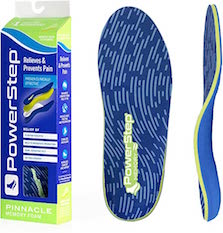
One of the products I always tell people about are PowerStep Insoles because PowerStep Arch Support Insoles relieve back pain. PowerSteps are brand name universal orthotics. Simply pop them into any shoe or boot and you have added correct arch support promoting proper posture. I have been using PowerStep Insoles for over 20 years and the benefits are tremendous!

How PowerStep Insoles Promote Proper Posture

If this is the first time you have heard of orthotics you may be wondering how PowerStep Insoles promote proper posture. Arch support is the short answer … but let me explain.
When the arch of your foot is properly supported incidentally that support will transfer up your body. Consequently reducing or eliminating knee pain, low back pain and even neck pain. But how? The arch of your foot is the starting point for good standing posture. As a result shoes lacking proper arch support cause the soles of your feet to flatten out over time leading to all types of pain. Hence in shoe orthotics. By supporting the arch of your foot correctly the bones in your lower legs will come back into balance. Likewise your thigh bones and pelvis will realign. At the pelvis is where low back pain reduction will take place. Positive posture will continue up your spine and your neck as well.

Actually I wanted to include a definition of Orthotic as it pertains to insoles but there seems to be room for debate. And for good reason. Take a look at this article from Podiatry Arena discussing the definition of “Orthotic”.

PowerStep Insoles Low Cost Low Back Pain Relief
PowerStep Insoles are low cost universal alternative to orthotics. Say YES to this low cost low back pain relief product!

What To Expect During Posture Correction

When you are going through steps to correct your posture there may be new discomforts. I want you to know what to expect during posture correction stages. When you first start using PowerStep Insoles you will feel some discomfort in the arches of your feet. This is normal. What is happening is the tendons in the soles of your feet are returning to their natural position. Subsequently this correction discomfort will last for about a week. During this time you may want to take them out for a time. That is okay but be sure to go through the process and keep them in as long as possible. As a rule try to keep them in for 60-80% of your day.

Off And Running

Once the week is up you will notice that any discomfort you felt in your arches is gone. Presumably you may also notice reductions in knee and back pain as well. At this stage you should have your PowerStep Insoles in all day long. If you change shoes make sure you put the PowerStep Insoles in the shoes you are wearing. Do not assume that you’ll be okay without them for a short time. You will find that you have grown to need the correct support and you’ll wonder how you ever lived with so much pain for so long.

PowerStep Insole Variations.

PowerStep Insoles offer a few variations to suit your needs. There are Full Length, 3/4 length, soft arch, Women’s full length and Women’s 3/4 length. Ultimately it is personal preference which you choose however I generally recommend the 3/4 length option. Especially if you have wide feet. The full length PowerStep Insoles work best if you have extra room at the toe portion of your shoes and boots. I have had clients purchase full length for their shoes with extra room and 3/4 length for dress shoes with narrow toes. In my case I go between gym shoes, work boots and dress shoes so the 3/4 length suit me best. I have two pairs of 3/4 length PowerStep Insoles. For best sanitation practices switch one pair into the footwear of the day and allow the other pair to air out for 24 hours. You can sprinkle a bit of baking soda on them to reduce odor causing bacteria stinking up your shoe inserts. If you work on your feet all day, you may want to replace your PowerSteps every 6–12 months or rotate out two pairs so they have time to dry out.

Click On Any Link And You Will Be Taken To Amazon To Select Your Size.

All Sizes Are Available.

PowerStep Original Inserts

Originals are full length insoles with neutral arch support and standard padding.

PowerStep Wide Width Inserts

Wide width insert supports with the PowerStep neutral arch. Trimmable to fit your width perfectly.
PowerStep Neutral Arch Support Inserts

Camouflage color high-impact arch support insoles for hiking and outdoors.

Powerstep 3/4 Length Heel and Arch Support

My personal favorites. I have wide feet so the three-quarter length allows my 2E wide foot to fit in more boots and shoes.


Powerstep Arch Supports Insoles with Memory Foam

Experience walking on a cloud. Get arch support with memory foam to cradle your heels and toes.


Powerstep Men’s Arch Support Orthotic Flip Flop Sandals

At the beach or the bazaar keep every step balanced and pain free. Neutral arch support Men’s sandals.


Powerstep Women’s Slenderfit Fashion Neutral Arch Support

Feminine designed SlenderFit neutral arch supports are designed specifically for thin women’s shoes like flats or mary jane’s.


Powerstep Low Profile Running Shoe Neutral Arch Support

Ultra thin design and extra shock-absorbing padding for runners. Available in 3/4 and full length supports.


PowerStep Women’s Arch Support Thongs

Unmatched arch support from a sidewalk and sand thong sandal. Deep heel cradle; available in 5 colors.

Looking for “Orthotics Near Me” and haven’t tried PowerStep brand arch support inserts? You owe it to yourself to give them a try!

Shoes Without Arch Support

Good posture starts at your feet and goes up. Shoes without arch support cause knee and low back pain. Generally low quality shoes with have little to no arch support. Additionally, an unsupported foot arch will transfer posture distortion all the way to your neck. As a matter of fact sandals are the notorious for having no arch support. If you choose to wear sandals I recommend Keen or Teva because they have better arch support than other brands. When you wear shoes you should use orthotic inserts. You don’t need to spend a fortune on custom made orthotics. Universal orthotics such as PowerStep are very affordable and will make an incredible difference in your posture.


PowerStep Brand Inserts Are The Best On The Market.

My Personal Review Of PowerStep Insoles

Finally my personal review of PowerStep Insoles. After well over 14 years of daily use I can say that PowerStep Insoles are incredibly durable. I have used PowerStep arch support shoe inserts while running, hiking, working on cars, doing construction projects, attending weddings and dancing all night. They truly have been a lifesaver for my knee and low back pain. PowerStep now offers Sandals which is something I have been waiting for. Keen brand sandals have worked really well for me over the years. Keen’s have a similar arch support to PowerStep Insoles and are also durable, American Made, quality. If you have a desire to stop low back pain and knee pain PowerStep Insoles are the best way to correct your posture from the ground up.